


Contents
Want to LEARN More About Us?
Follow Us On


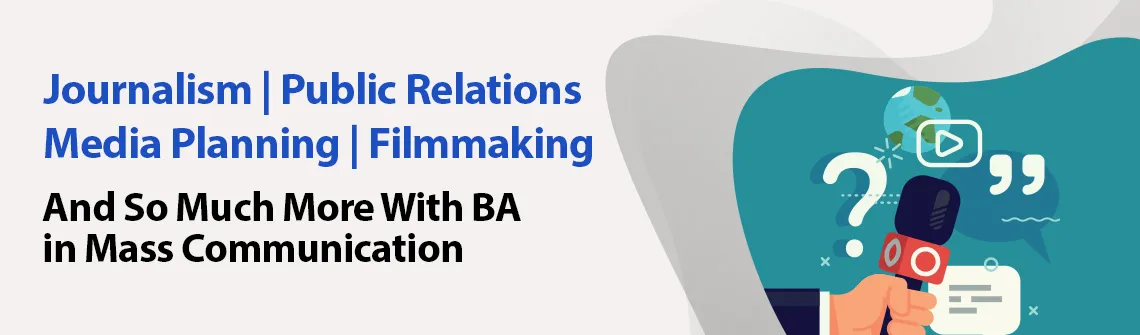
Opportunities in Mass communication
Mass communication is a broad field that includes television, radio, newspapers, magazines, and the internet. It is a dynamic and ever-evolving field that offers multiple career opportunities for individuals interested in journalism, media production, public relations, and advertising. In this article, we will explore the different career paths available in mass communication, the skills required to succeed, and the challenges that professionals in the field may face. The Symbiosis SET 2026 exam is the first step for students who want to join top Symbiosis institutes. You can apply through the SET Test 2026, which is simple and fully online.
There are many career opportunities available in mass communication, depending on individual interests and qualifications. The following are some of the most popular roles.
Journalist
The primary duty of a journalist is to gather, investigate, and deliver newsworthy information on various current and upcoming events. They find leads, establish contacts and sources for firsthand research, and conduct secondhand research. They pitch story ideas to editors, work with deadlines, and maintain records of their notes, interviews, and audio and video recordings. In addition, journalists must ensure that their writing is accurate, honest, and unbiased, as it informs and influences the public.
PR Account Executive
A Public Relations Account Executive manages client accounts across print, broadcast, and online media. They typically work with PR firms or within the PR departments of large organizations. They conduct industry, market, and consumer research while understanding client objectives and target audiences. They then develop PR strategies that align with client requirements and budgets and present their proposals for approval.
They are responsible for crafting and maintaining a positive image for their clients by implementing promotional campaigns on different platforms and monitoring the accounts for potential risks and threats. They manage any negative situations and handle damage control when necessary. In addition, they maintain relationships with the media and influencers and stay current on industry developments.
Event Manager
Event managers, also known as event coordinators or planners, are responsible for planning, coordinating, executing, and monitoring various private and public events. These events can include family events, business events, sports events, award functions, celebratory events, conferences, seminars, and promotional events. In addition, they meet with clients to understand event objectives, specifications, and budgets.
Their work includes finding and booking venues, obtaining permits, negotiating with sponsors, and coordinating with suppliers. In addition, they handle logistics, manage timelines, reduce risks, keep clients informed, send invoices, collect feedback, and create event reports.
Media Planner
A media planner works with advertising agencies, PR firms, and businesses to plan, implement, and oversee various advertising campaigns. They create campaign proposals and budgets, conduct market research, and analyze target audiences based on client briefs. By analyzing data, they develop a combination of campaigns, monitor trends, evaluate campaign performance, and make improvements to increase brand awareness and customer loyalty. Media planners must be flexible, quick-thinking, and creative to gain public attention and ensure campaign success.
Director of Communications
A Director of Communications is responsible for overseeing the flow of information from an organization to its audience. They lead a communications team, develop communication campaigns, and direct public relations and marketing strategies. Their goal is to promote the organization in a positive light, and this includes proactive planning, monitoring risks and threats, and managing crises. They represent the organization at media events and handle media inquiries. In addition, they release press releases and promotional materials to support the organization's overall business goals. In case of setbacks, they take swift action to overcome or minimize them.
Filmmaker
Filmmakers, also known as film directors, direct short films, feature films, and documentaries. Their duties include reading, selecting, and editing scripts, deciding how the narrative will be told, and determining the production budget. In addition, they organize casting sessions to choose actors and actresses, hire art directors, music composers, and storyboard artists, and assemble a team of camera technicians, costume designers, makeup artists, and set makers.
They select locations and create sets for filming. They oversee acting rehearsals, motivate actors to deliver the desired dramatic performances during filming, ensure that filming follows the schedule, and work with editors to create the final film. Filmmakers also interact with the media and the public to promote and market the movie.
Information Specialist
Information specialists gather, update, and manage organizational databases for various organizations across different industries. They conduct research in relevant areas, collect necessary data, file and organize it in the database, and manage the data and digital information systems.
Challenges
While a career in mass communication can be rewarding, it also comes with challenges. There are several common challenges to overcome, including.
-
Competition: The media industry is highly competitive, making it difficult to secure a job or advance a professional's career.
-
Deadlines: Media professionals often work under tight, stressful deadlines.
-
Ethical Dilemmas: Journalists and media professionals may face ethical dilemmas when covering sensitive or controversial topics.
-
Change: The media industry constantly evolves with new technologies and platforms emerging. Keeping up with current events and adapting to them is important.
Conclusion
In conclusion, a career in mass communication is a highly dynamic and exciting field that offers a wide range of opportunities for individuals with a passion for storytelling, creativity, and the ability to connect with audiences. It is a field that not only allows you to express your creativity but also allows you to inform, educate, and entertain society. It is a constantly evolving field that offers you the chance to make a real difference in the world. Whether interested in journalism, media production, public relations, or advertising, mass communication will challenge and inspire you. With the right skills and dedication, you can make a meaningful impact and build a rewarding career in mass communication.
If you are a media and mass communication enthusiast and you are looking for a programme that can help you grow into a future media professional, then you can consider applying for programmes at Symbiosis Centre for Media and Communication (SCMC) Pune via the SET Test 2026.
Related Blogs

Honours Degree in India: What, How & Why?
India skills 2023 report states that 50.3% of job seekers considered under India’s Employable Talent. The Economic Survey that India's economic recovery from the Covid pandemic is complete and the economy is expected to grow in the range of 6 percent to 6.8 percent in the financial year 2023
BBA vs BBA Honours - What's the difference?
Globally, companies are searching for competent personnel who can manage work and deliver on expectations quickly and efficiently.

10 Dynamic career options to maximize growth after B.Sc. (Economics) Honours
As one of the world's fastest-growing economies, India is home to diverse range of businesses and organisations constantly seeking talented and ambitious professionals to help them succeed.
Bachelors of Business Administration (BBA) - A Complete Student Friendly Guide
A Bachelor of Business Administration (BBA) degree is a popular undergraduate program that prepares students for careers in various industries, including finance, marketing, accounting, human resources and more.


